
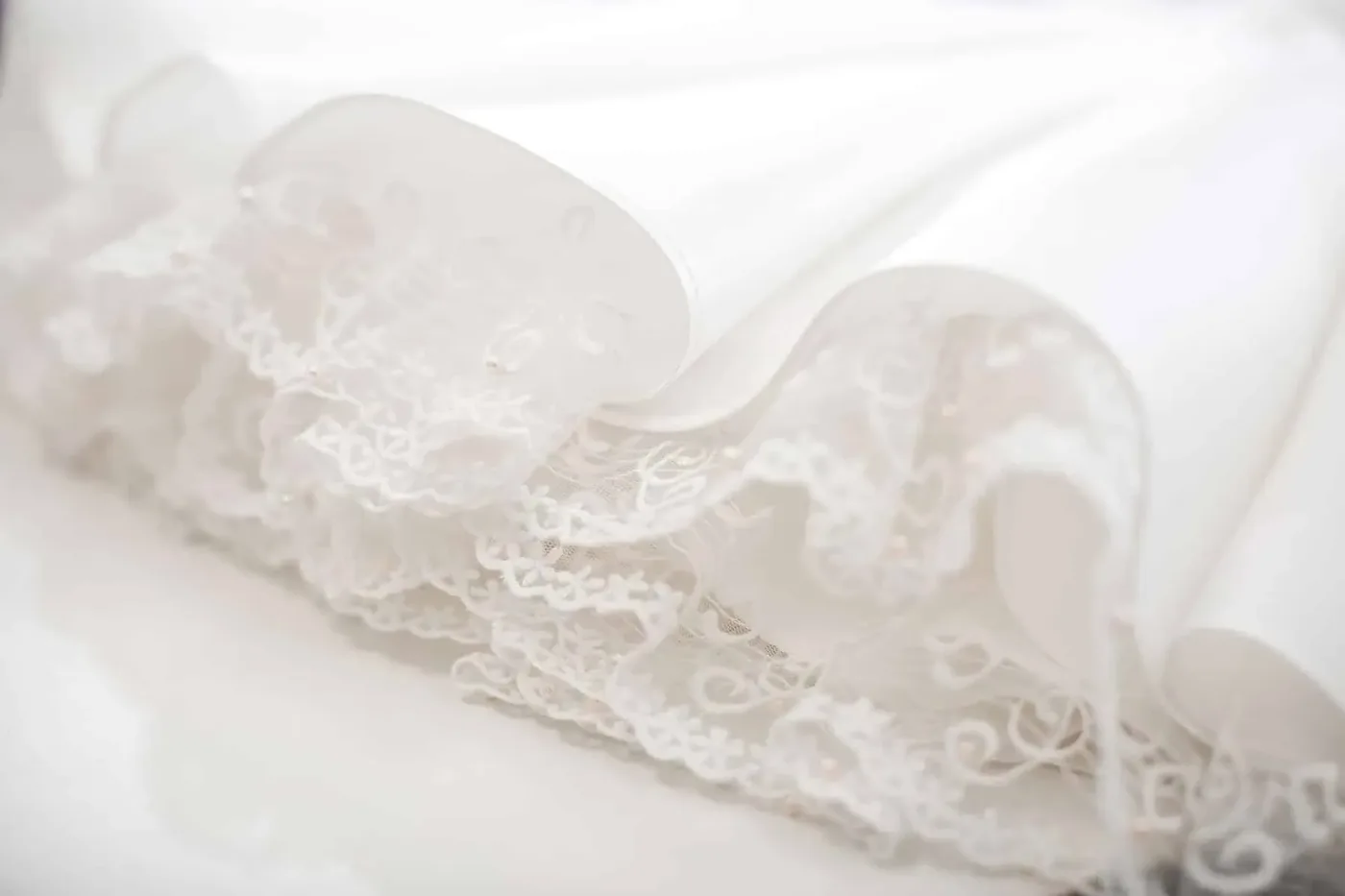
The morning the gown arrived back from the initial fitting, the mother of the bride noticed a faint smudge near the hem where the silk met the first row of hand-sewn lace. It was nothing dramatic, just the kind of mark that appears when fabric travels between homes and seamstresses. She knew the dress would eventually need professional care, yet the thought of handing it over to any standard process felt risky. Silk and lace do not forgive aggressive solvents or mechanical pressure.
The real stakes behind a single stain
Wedding gowns carry more than fabric. They hold the weight of family photographs that will be passed down, and the memory of a day that cannot be repeated. A bead that loosens or a section of lace that yellows changes the story the dress tells. Most household stains on these garments involve body oils, makeup transfer, or the light soil picked up during final alterations. These substances sit on the surface but can migrate into the fibers if treated with the wrong chemistry.
Standard dry-cleaning solvents often carry a higher pH that can weaken silk over time and cause certain dyes in lace to shift. Embellishments—seed pearls, sequins, or metallic threads—may loosen when exposed to heat or agitation that machines introduce. The damage does not always appear immediately. Sometimes it shows months later when the preserved box is opened again.
If your gown is still with the seamstress or already boxed at home, the first step is understanding the right cleaning approach.
Schedule a Pickup →What pH-neutral solvents and hand techniques actually do
The process begins with a detailed inspection under controlled light. Each layer is examined separately: the outer silk, the lining, the lace overlays, and any areas where embellishments are stitched. Technicians note the type of silk, whether the lace is machine-made or hand-crocheted, and how the beading is secured. This map guides every subsequent step.
Cleaning then uses pH-neutral solvents formulated specifically for protein fibers. These solvents lift oils and light soils without altering the silk’s natural sheen or the lace’s structural threads. Application happens by hand, with soft brushes and controlled blotting rather than immersion or tumbling. Areas around embellishments receive extra attention so that adhesives or threads are never stressed. After cleaning, controlled air drying prevents shrinkage, and final pressing is done with low-heat equipment that respects the multiple layers of a gown.
The same care extends to preservation. Once clean, the gown is folded with acid-free tissue between each layer, placed in a box designed to allow minimal air exchange, and labeled with instructions for future handling. Families who have stored gowns this way for decades report that the silk remains supple and the lace retains its original color.
Why the details matter more than speed
Busy households in Cupertino juggle calendars that rarely slow down. Yet rushing a wedding gown through any automated system trades short-term convenience for long-term regret. The clients who have entrusted Alex's Dry Cleaning Valet with these pieces over the years understand that the difference lies in the inspection time and the choice of chemistry. Alex's Dry Cleaning Valet has served Bay Area luxury households since 1984, and that continuity shows in the consistency of results.
When a gown returns properly cared for, the relief is quiet but real. The mother who noticed the smudge can close the preservation box knowing the dress will look as it did on the day it was worn. No loose beads. No faded lace. No surprises when the next generation opens it.
Questions about timing or specific gown details are common—here are the answers families ask most often.
the best dry cleaning in CupertinoThe same standard applies whether the gown is destined for a family archive in Cupertino or travels with the household to another residence. The solvents, the handwork, and the layered inspection remain unchanged. That consistency is what allows the dress to keep its story intact for the next chapter.