
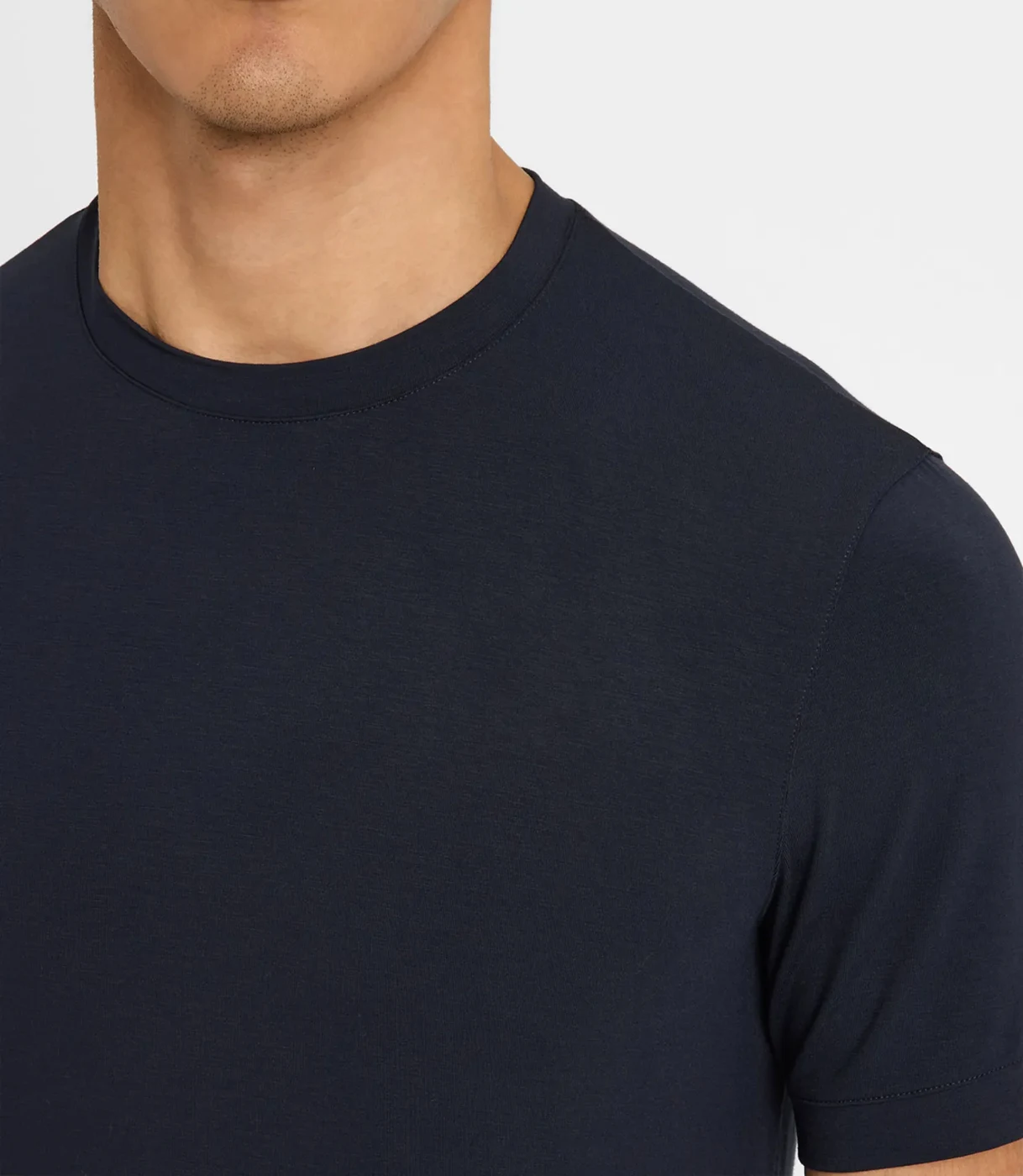
The founder reached for the same black tee again, the one that had become his default for back-to-back investor updates. It still felt right on the shoulders, but the neckline had started to relax just enough to notice in the mirror before the first call.
These garments are rarely simple cotton. Many arrive from labels that use fine-gauge knits, sometimes blended with cashmere or silk for drape and recovery. The fabric is chosen precisely because it holds a clean line under a blazer or stands alone in a video frame. Yet that same structure demands attention after every wear, because repeated laundering without proper inspection is what slowly erodes the fit.
Piedmont mornings move fast. A single overlooked stretch in the collar or a faint water mark from hasty steaming can pull focus during the first pitch of the day. The difference shows up not in dramatic damage but in the small visual cues that register to anyone watching closely.
What actually changes after repeated wear
The knit fibers compress with movement and body heat. Without targeted finishing, the chest and sleeve areas begin to relax unevenly. Color can shift slightly if detergent residue remains or if the piece is pressed at too high a temperature. These shifts are gradual, which makes them easy to miss until they appear on camera or across a conference table.
Alex Najafi founded Alex's Dry Cleaning Valet in 1984 and has operated it personally ever since, building a process that treats each garment as an individual piece rather than a batch. The team examines every seam and edge before cleaning, then finishes by hand so the original tension returns to the knit.
When the tee is part of a daily rotation, the right finishing schedule keeps the silhouette consistent without extra mental load.
See Our Pricing →How the right care protects the investment
Proper handling starts with identifying the knit type and any delicate trims. The garment is then cleaned at controlled temperatures that preserve both color and elasticity. Final pressing uses forms that support the shoulder and chest so the piece regains its intended shape rather than being flattened.
Clients in Piedmont who rotate several of these tees notice the difference most on days when back-to-back meetings leave little time to think about wardrobe. The tee that returns looking identical to the day it arrived removes one variable from an already full morning.
The same standard applies whether the client is based in Piedmont or traveling between homes; the inspection and finishing steps remain unchanged. That consistency matters when the garment in question costs as much as many suits.
Keeping the uniform reliable
Founders rarely have time to monitor incremental changes in their clothing. They notice only when the piece no longer performs the way it did on the first wear. A service that tracks each item’s history and returns it ready for the next use removes that friction entirely.
When the black designer tee is the one constant across investor calls, board meetings, and late-night reviews, its condition becomes part of the daily operating system. the best dry cleaning in Piedmont handles the details so the garment continues to support the day instead of competing for attention.